Intervals in Music
Music is made of intervals. Intervals are not merely mathematical or technical calculation of note distances. How one feels and thus traverses any given interval is what gives music its emotional life.
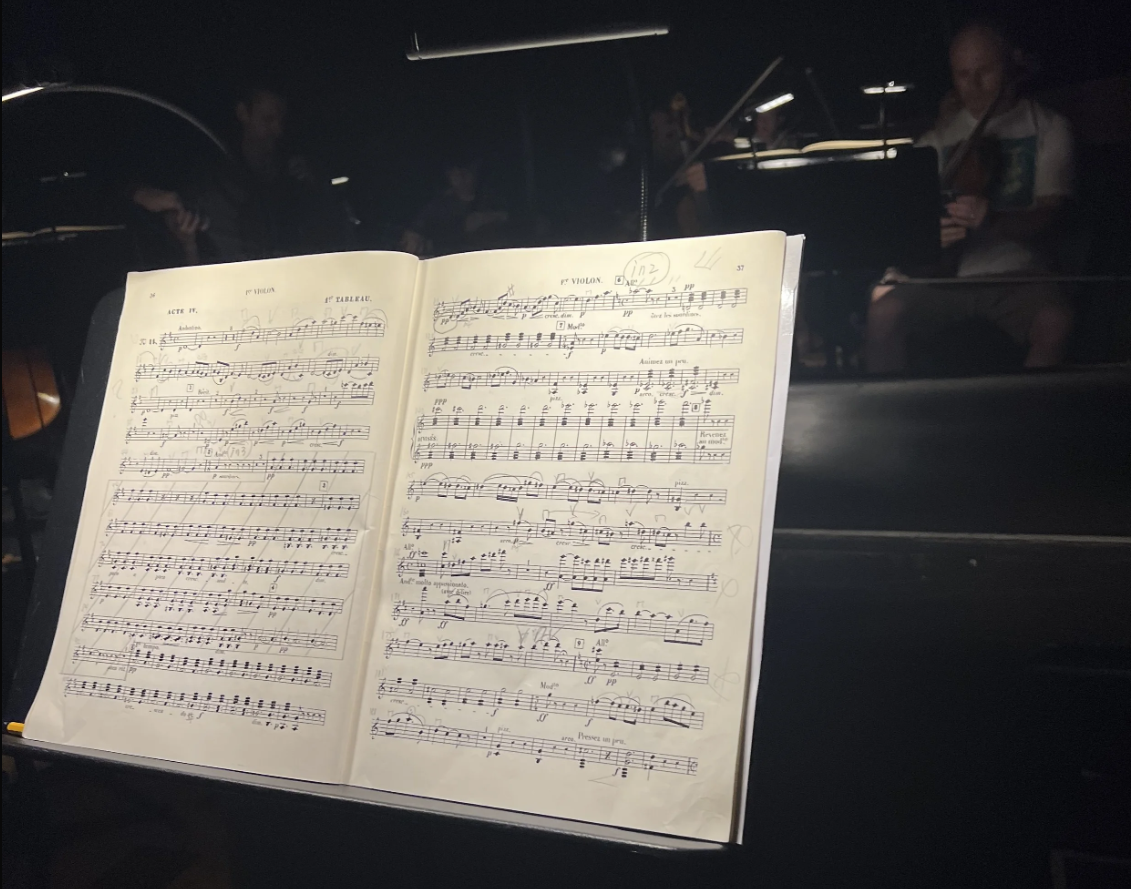
I feel there’s no genre of music where the feeling of the interval is more crucial and life-giving than in opera. I’ve been guest-leading the OperaHK Orchestra in Gounod’s Romeo and Juliet these couple weeks, and I’ve been indulging in feeling ALL the intervals everyday. Perhaps it is because the drama and the framework of a plot (no matter how simple or at times, even simplistic) adds to the potency of every emotion. And there’s how the timing of the music needs to fit so precisely into the rhythm of the drama. One has to go from shock to despair in exactly 2 and a half beats, and the timing of HOW the former transforms into the latter needs to be bang on, too! (It has to make sense emotionally, like acting. Even if you’re only playing an orchestra tutti part.) I find opera-playing to be incredibly cathartic. It is a luxurious outlet to have allowance to feel very intensely, but having the safety to do it with abandon in an extremely controlled manner. I think some form of this paradoxically simultaneous indulgence and escape is probably what draws a lot of people to the arts. As someone who can have too many messy feelings in life at times, I think the drama and theater that anchor the emotions is the exact order that this chaos of a psyche needs!
I still can’t put my finger on what makes the interval so potent in opera though. Those pleading diminished 7ths, the sighing augmented 4ths, the anguish in a simple half step. And yet here this one is of anger, but that other one is of total resignation. It’s akin to how Maria Callas said that all the acting instructions are in the text. For the musical instructions, the interval will guide you. But they need to be more than read and played. They need to be felt in order for any true understanding to emerge.
To feel intervals is to love them, which I think is a big part of what it means to love music. And the more deeply you feel it, the more music gives back. I was working on scales with a 6 year-old student the other day. Imagine my joy when he said during this commonly perceived as tedious exercise, “I love the mi-re-do, I love that part.” (I happened to have caught the moment on video too - see my story!) The simple, natural pleasure that he felt is one and the same as my love of indulging in operatic (and other) intervals. The only difference being our different emotional complexities.