Amelia Chan

violinist

Amelia Chan is currently concertmaster of the City Chamber Orchestra of Hong Kong (CCOHK).

She came to this position from her tenure as concertmaster of the West Virginia Symphony Orchestra (US). An experienced leader, Amelia has served in the concertmaster chair under acclaimed conductors such as Sir Neville Marriner, Michael Tilson Thomas, Manfred Huss, Sergiu Commissiona, Anton Coppola, Zdeněk Mácal, Jorge Mester, Julius Rudel, and Gerard Schwarz. She has also performed with the New York Philharmonic extensively. As a chamber musician, Amelia has served as first violinist of the Montclaire String Quartet, and has collaborated with guitarist Sharon Isbin, accordionist Richard Galliano, violinist Lara St. John, the Ying Quartet, members of the Vienna Philharmonic Orchestra, and the Jupiter Symphony Chamber Players (NYC), among others. She has appeared as soloist with orchestras including the West Virginia Symphony, the International Virtuosi Orchestra on tour in Central America, the New Amsterdam Symphony Orchestra (NYC), the Brooklyn Symphony Orchestra (NYC), and the City Chamber Orchestra of Hong Kong. She has shared the stage as co-soloist with acclaimed flutist Sir James Galway, and frequently acts as director for the City Chamber Orchestra. She has performed at the Costa Rica Music Festival, the Guatemala Music Festival, Cooperstown Chamber Music Festival in New York and the Pacific Music Festival (Japan).

Amelia has been heard on WQXR, New York; WQED, Pittsburgh; West Virginia Public Broadcasting; BBC Radio Scotland, Scotland; and RTHK Radio 4, Hong Kong.

As an educator, Amelia approaches the teaching of technique through the lens of whole-body biomechanics, and on the principle that techniques of playing an instrument need to be relational to the body, and to how it moves, instead of relying on a static one-size-fits-all method. She believes in a focused and deep education that goes beyond rote training, where the student learns discernment and critical thinking, while sifting through the layers of intellect needed to decipher the depths of the musical art, to get to the natural, joyful simplicity of music-making.

Amelia holds undergraduate, graduate, and post-graduate degrees from the Mannes College of Music and Manhattan School of Music (NY). She began her violin studies in the junior school at the Hong Kong Academy for Performing Arts. Her major teachers included Thomas Wang, Alice Waten, Albert Markov, Shirley Givens, Lisa Kim, Yoko Takebe, Sheryl Staples, Glenn Dicterow, and double-bassist Julius Levine.

For more information on Amelia, please go to her Instagram page at https://www.instagram.com/ameliachanviolin/ 

——————————————————————————-

"Concertmaster Amelia Chan in particular played with passion, acting as the vibrant soul of the ensemble.” South China Morning Post 

“…gutsy solo violin throughout [by] concertmaster Amelia Chan…” theprickle.org

The Clockface

The Clockface #thelab
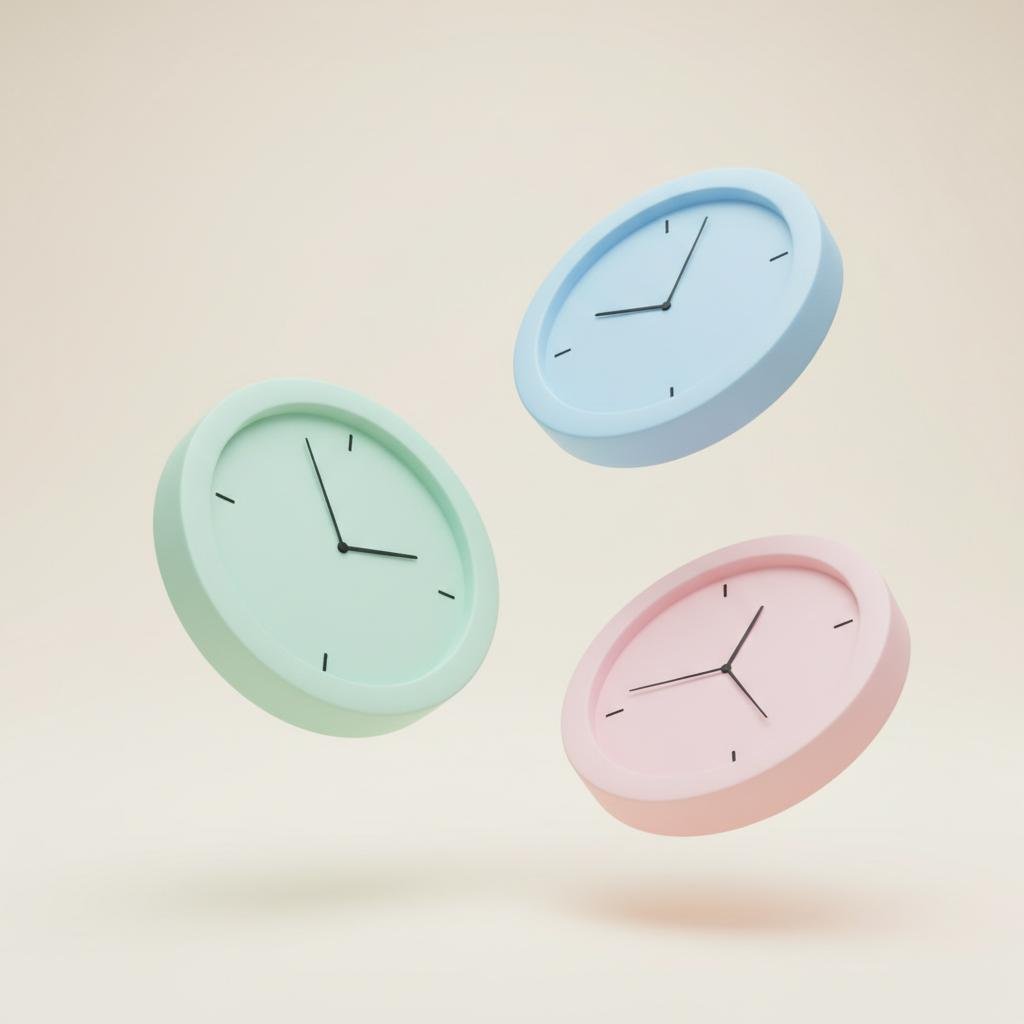
The clockface is a great tool to understand the mechanics of playing and serves as an illuminating aid to teaching. It provides more accurate coordinates for body mapping and more dynamically shows the relationship of how different parts of the body interact with each other. For instance, the “straight” bow isn’t always a down-bow going towards 2 o’clock. Depending on how the body is rotated, the bow typically moves from 2 to 4 o’clock. (Although the description of a “straight bow” can be a valid starting point of instruction, it is inherently a false concept—the bow is never straight in a linear sense.) It’s also a great tool to help each individual understand how they need to adjust according to their own body.

Playing the violin is all about finding the right angles. The clockface can be applied to multiple possibilities beyond bow direction. The clock can represent the holding of the violin, the left arm positioning while shifting, or it can be imagined as being in the chest to allow for ribcage rotation. The clock can also tilt and turn to accommodate any directional change. One can also specify and isolate whether you’re moving the elbow, forearm, or shoulder towards any given clock position. By using these coordinates, one can easily and intuitively change the system of levers in the body without getting into technicalities.

Try to play with a clockface in front of you-I’ve been practicing this way. Experiment with the left side of the body being the hour hand and the right arm being the minute hand. There are always multiple systems of leverage going on when we play, and therefore different sizes, shapes, and placements of clocks. It’s a great way to help one get a deeper understanding of the mechanics of playing.